Applications
Where the H-Type Is Used
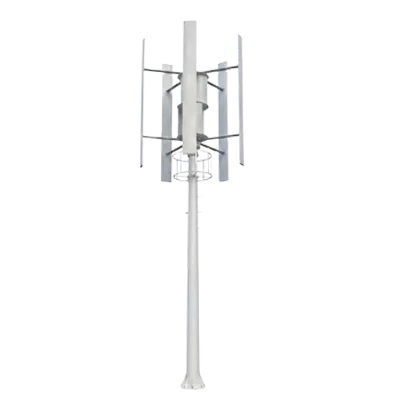
The H-Type is the smallest turbine in the Vertix range. At 50–200W it is not a system-scale generation source — it is a micro-generation unit used to maintain battery charge at remote or low-load sites where access to grid power is limited or absent. The 2 m/s cut-in speed and compact rotor make it one of the lowest-threshold wind energy products available.
Remote Off-Grid Sites
Maintain Charge Where Solar Alone Is Not Enough
At remote locations — security cabins, boundary monitoring, telecommunications boosters, rural water pumps — the H-Type provides wind generation that operates independently of daylight. Paired with a small solar panel, it extends battery autonomy significantly, reducing the need for manual recharging or generator visits.
Low-Load Continuous Power
Sensors, Cameras & Monitoring Equipment
IoT sensors, CCTV cameras, weather stations and environmental monitoring equipment typically draw between 5W and 50W continuously. An NE-50H or NE-100H generating at its rated output will supply these loads directly and float-charge the battery bank between peaks. The vertical-axis design generates regardless of wind direction.
Supplementary Generation
Second Source on an Existing 12/24V System
If you already have a 12V or 24V solar and battery system, an H-Type turbine can be connected to the same battery bank via a dedicated wind charge controller. It adds an independent second generation source — generating when solar does not — without requiring any changes to your existing solar equipment.