Pure Alloy 6063 aluminium solar mounting for flat rooftops, pitched roofs, open ground and fields. L1, L2 and L3 frame configurations. Fixed via direct anchor, driven pile or ballasted on concrete blocks — no elevation, no steel, no complexity.
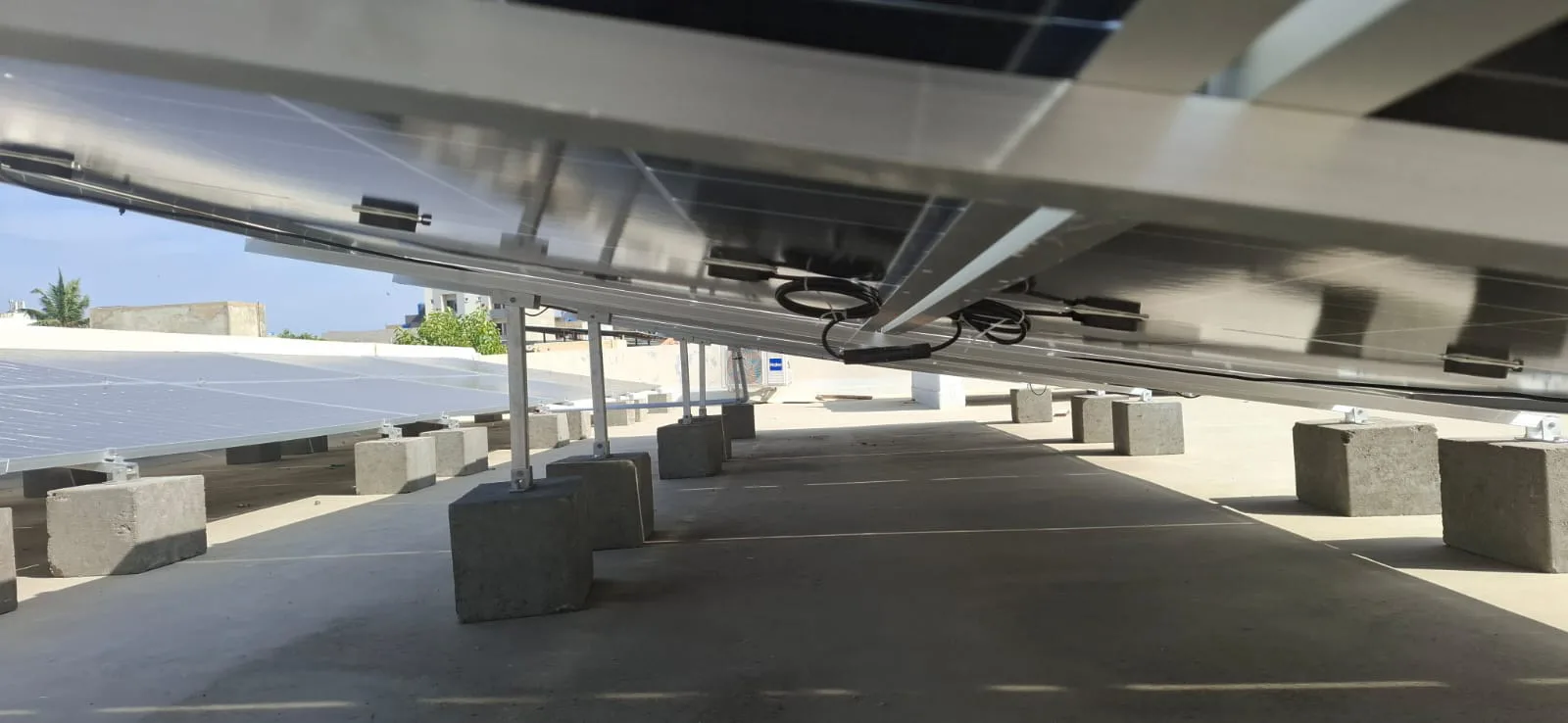
No steel anywhere in the system. Pure Alloy 6063 aluminium from profile to fastener.
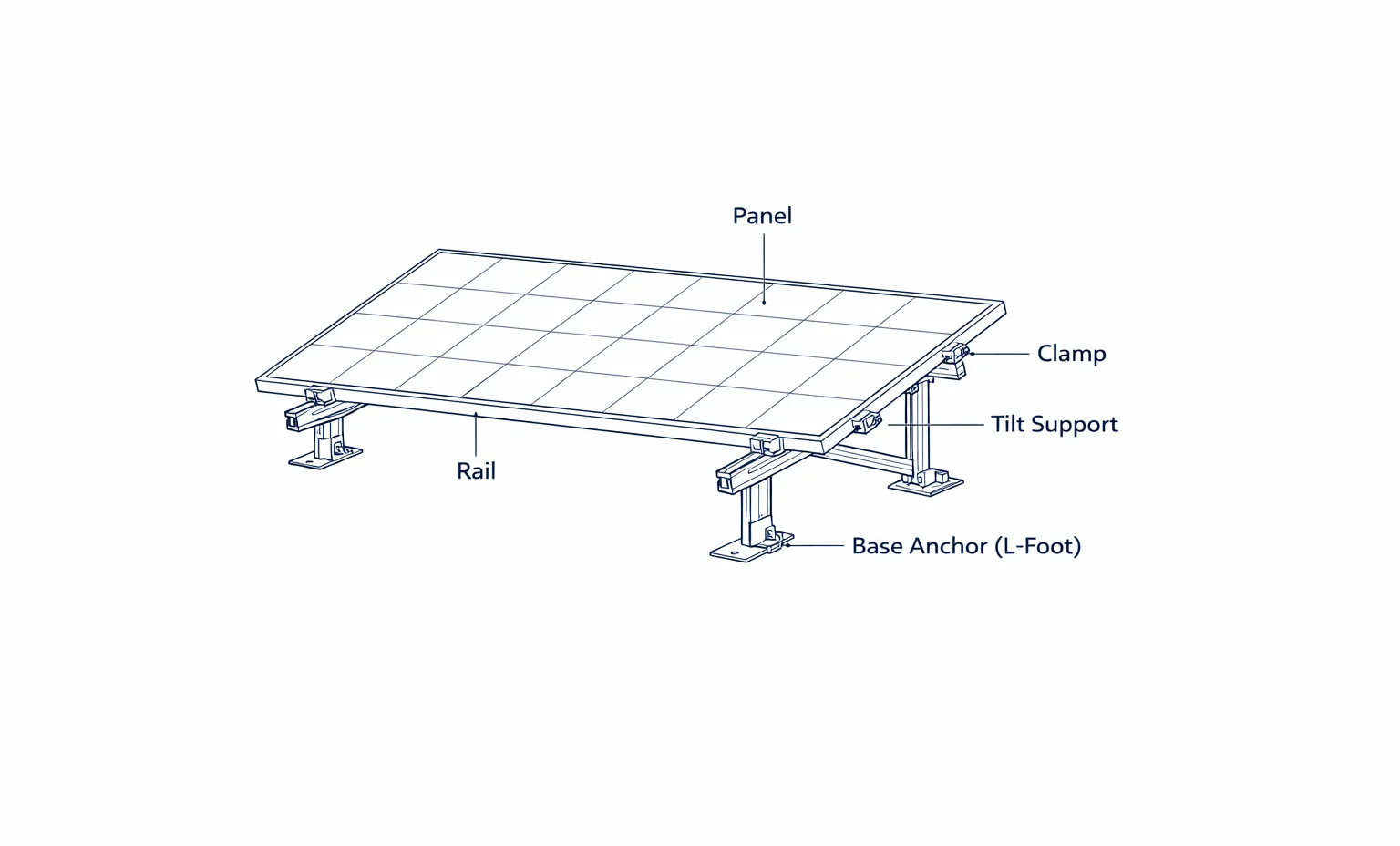
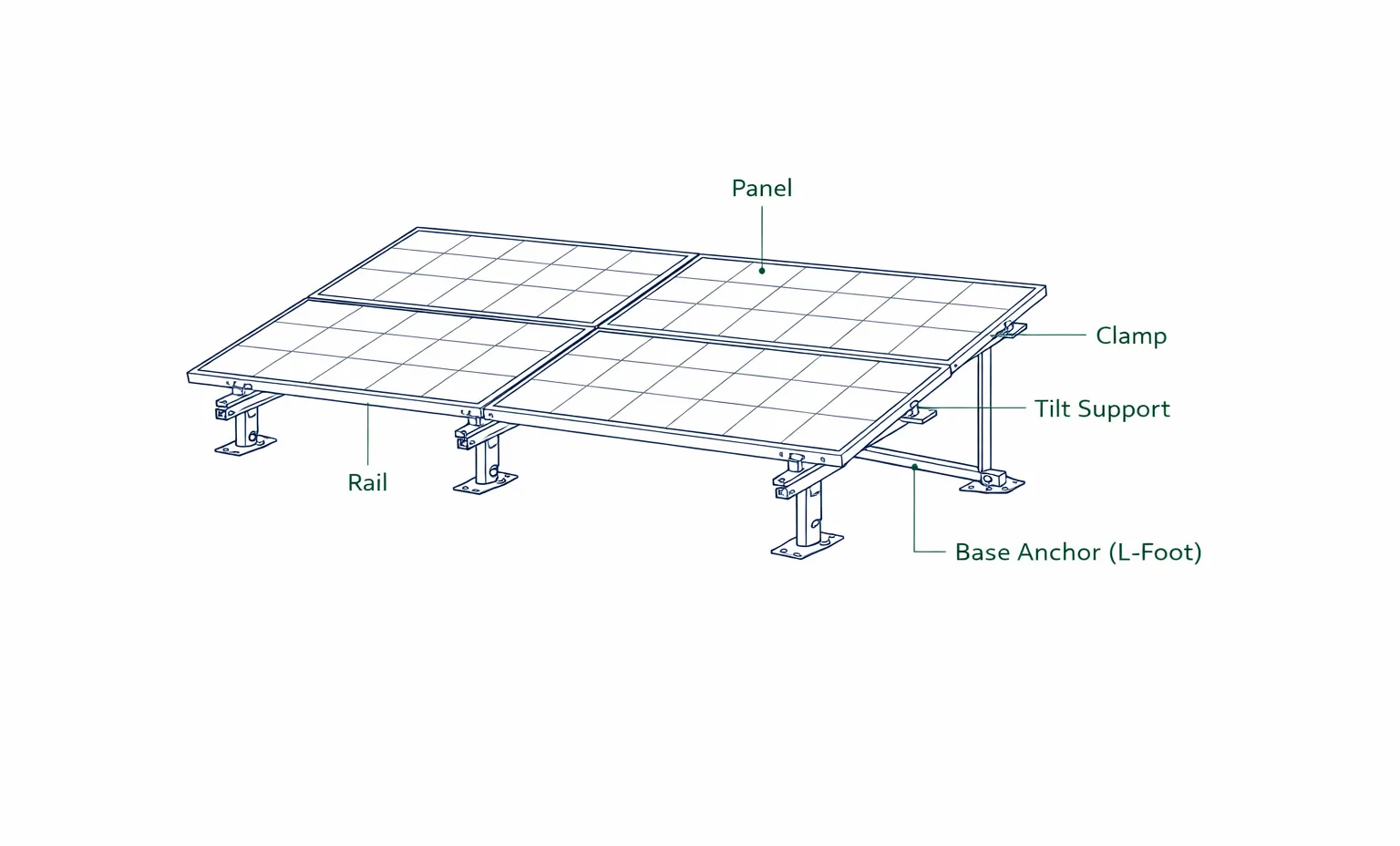
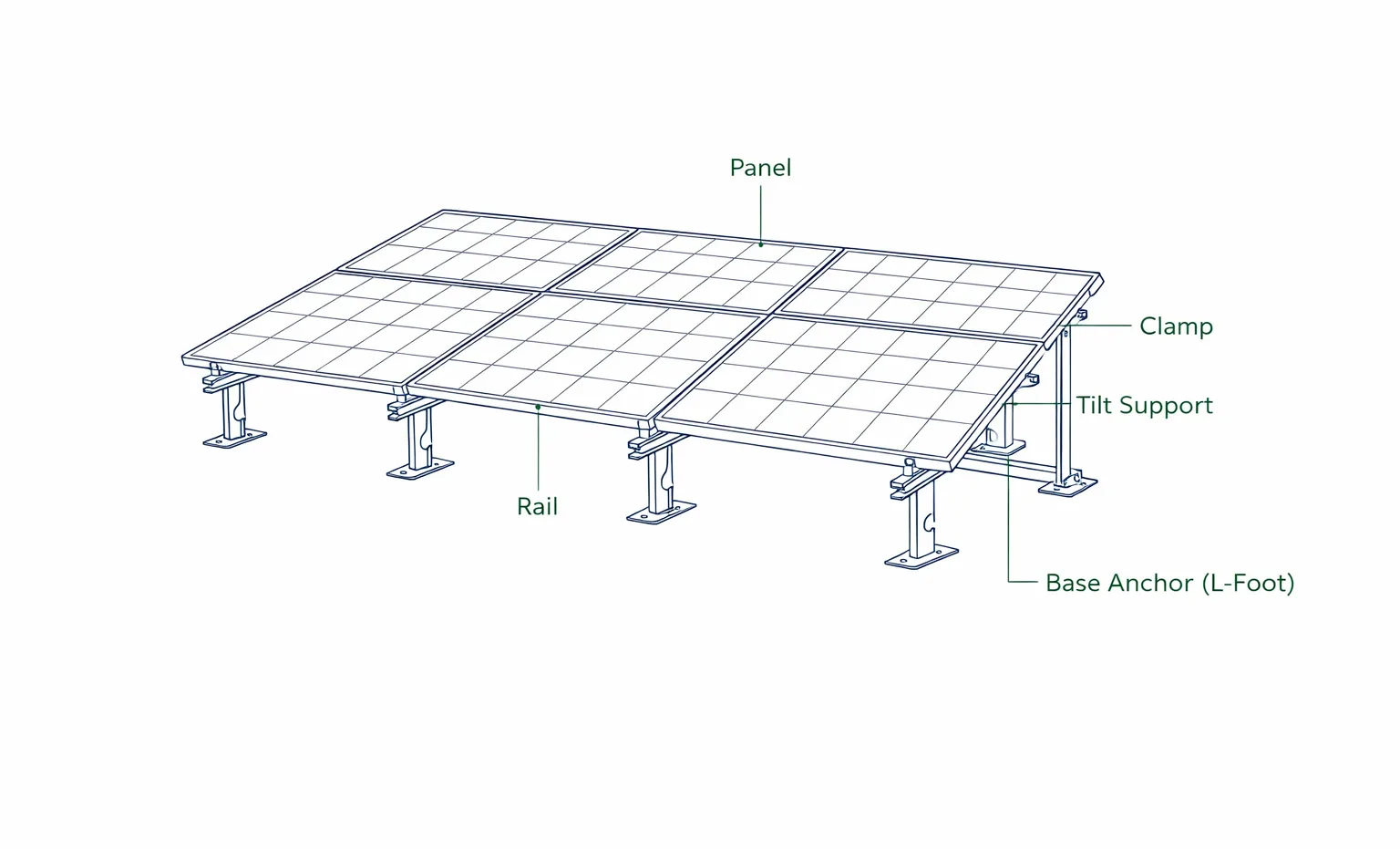
Single, double and triple panel-row frames to match your roof or ground footprint.
Movable rail and tilt pillar system allows angle adjustment on flat surfaces without fixed penetrations.
Anodised and powder-coated profiles rated for 25+ years. Zero maintenance, zero repainting.
Lmaxx Base is the right product when you don’t need the space below the panels to remain usable. A flat factory roof with nothing on it. An open field or industrial yard. A residential rooftop where the roof serves only as a mounting surface. In all these cases, Base gives you the most efficient, most durable and most cost-effective solar mounting available — without the structural complexity or cost of elevation.
If your roof has generators, HVAC, water tanks or is used as a terrace, you need Lmaxx Elevate instead.
The L-configuration is selected based on your available roof or ground area, structural load limits and the number of panels you’re installing. All three use the same Alloy 6063 profiles.
Lightest roof loading. Suited to residential rooftops, older structures with limited reserve load capacity, and smaller commercial sites. Fastest to install and simplest to maintain.
The standard choice for commercial rooftops and open ground arrays. Best balance of panel density per anchor point, structural load and installation efficiency. Works equally well on rooftop and ground.
Maximum panels per anchor or pile. Used on large open ground arrays and industrial rooftops where reducing total anchor count is worth the higher per-point structural load. Foundation specified per soil conditions.
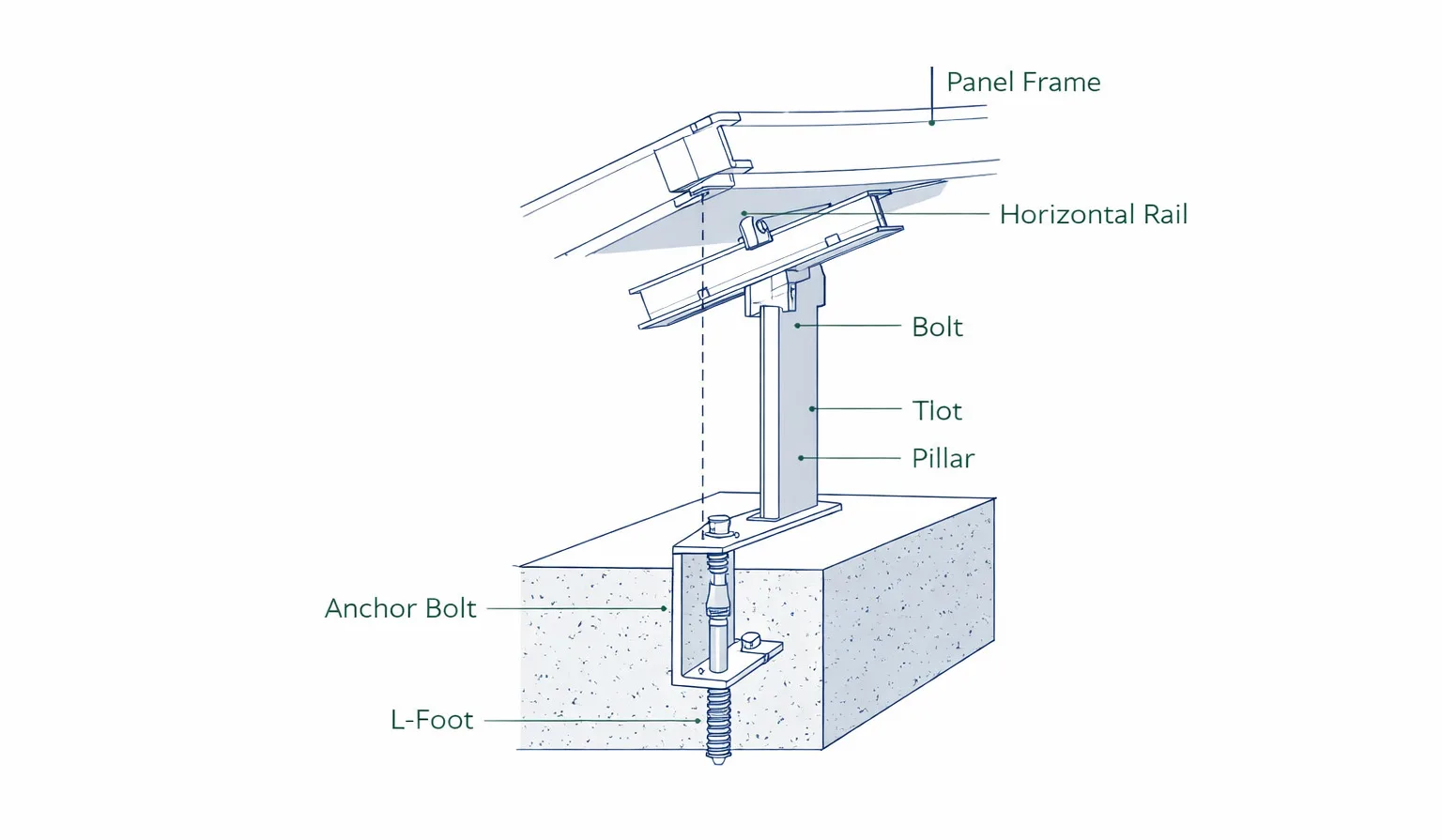
Lmaxx Base can be fixed in three ways depending on your surface type and conditions. On concrete rooftops and slabs, frames are anchor-bolted directly into the structure with EPDM-sealed penetrations. On open ground, aluminium or galvanised driven piles are hammered to engineer-specified depth — no concrete required, faster installation. Where roof penetration must be avoided entirely, we use custom fabricated concrete ballast blocks sized by our structural engineer for your wind zone — the frames sit on the blocks and wind uplift is resisted by calculated mass. The method is always specified, never assumed.
On pitched roofs, the roof itself provides the tilt angle. On flat roofs and open ground, tilt must be introduced by the mounting system. Lmaxx Base uses adjustable aluminium rails supported by short tilt pillars at the rear of each frame — the pillar height sets the tilt angle from 5° to 35° and can be specified during engineering to optimise annual yield at your site latitude. Rails are movable before final fixing, allowing panel position to be adjusted on site before the system is locked down. Every flat-surface installation includes shadow analysis to ensure inter-row shading is eliminated at the design sun angle.
Flat concrete slab rooftops and pitched tile or sheet rooftops on homes. L1 or L2 configuration. Ballasted or anchor-fixed depending on roof type. Optimised tilt for Karachi’s latitude.
Large flat concrete or IBR sheet rooftops on factories, warehouses and commercial buildings where the roof is not otherwise used. L2 or L3 configuration. High panel density, efficient anchor layout.
Open land, industrial yards and fields where ground space can be dedicated to solar generation. Driven pile or concrete footing foundations. L2 or L3 for maximum generation per civil cost.
Every Lmaxx Base installation is backed by full engineering documentation regardless of project size.
Share your roof type or site plan, panel count and location — our team will specify the right L-configuration and mounting method and prepare a quotation.